What Fruits Go in a Fruit Basket? The Complete Guide
What Fruits Go in a Fruit Basket? A Guide by Occasion, Season, and Meaning
There is a reason your grandmother never put bananas at the bottom.
She had assembled fruit baskets her whole life — for new babies, for sick neighbours, for the New Year table, for the family that had just buried someone. She knew which fruits travel well and which ones bruise the moment another fruit breathes on them. She knew that the apricots in June mean something different from the oranges in January. She knew, without ever using the word “curation,” that what goes into a fruit basket is not a random selection of whatever is at the market — it is a deliberate message, assembled with care.
This guide covers what fruits actually belong in a gift basket, organised by occasion and season, with specific guidance on what to avoid, what elevates a basket from a gesture into a genuinely memorable gift, and why certain fruits carry weight in Armenian gifting culture that no substitute can replicate. If you are putting together a basket for an Armenian family — or simply want to do it right — this is the answer behind the question.
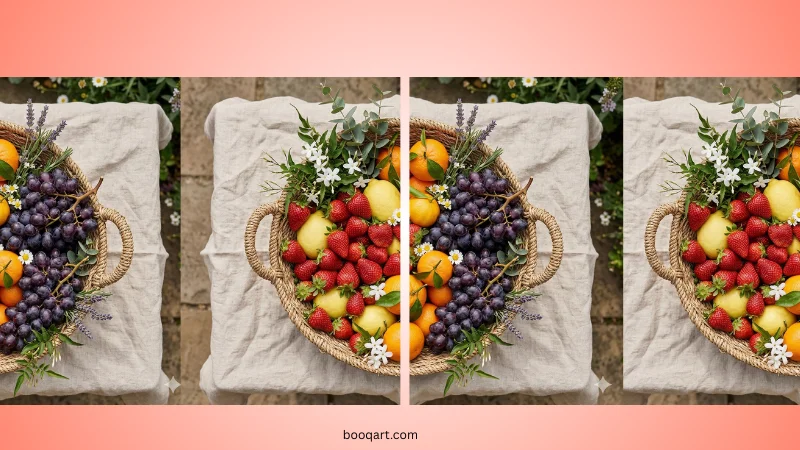
[IMAGE: An elevated overhead shot of a beautifully composed fruit gift basket containing pomegranates, mandarins, grapes and apricots on a wooden surface in warm light. Alt text: “what fruits go in a fruit basket — pomegranate mandarin grape apricot Armenian gifting”. Caption: The fruits in a well-considered gift basket are never random — each one is chosen for its durability, visual impact, and the message it carries to the recipient.]
The Rule Every Good Fruit Basket Follows
Before you pick a single fruit, there is one question to answer: how long does this basket need to stay beautiful?
A fruit basket delivered to someone’s front door should look as good on day three as it did on day one. That single criterion eliminates roughly half the fruit options at your local market. Strawberries are glorious for about 36 hours. Bananas will brown by day two if they are even slightly ripe. Figs bruise if a grape looks at them wrong.
The fruits that earn their place in a gift basket are the ones that balance three qualities simultaneously: visual impact, structural durability, and genuine flavour payoff. A basket that looks stunning but tastes like disappointment is not a gift — it is a performance.
Start from durability and build outward. The fruits listed in each occasion section below all meet this standard, with specific notes on positioning and handling where it matters.
[IMAGE: Side-by-side of bruised bananas on the left versus pristine mandarins and apples on the right inside a gift basket. Alt text: “fruit basket ideas which fruits last longest without bruising gift delivery”. Caption: Structural durability is the first criterion for fruit basket selection — fruits that bruise under pressure or deteriorate within 24 hours should be reserved for same-day consumption, not gifting.]
What Fruits Go in a Fruit Basket: The Core Selection
These are the fruits that belong in almost every gift basket regardless of occasion. They are durable, visually versatile, and understood across cultures as generous, healthful choices.
Apples are the architectural foundation of any fruit basket. Their firm flesh withstands pressure from surrounding fruits, which is why they always go at the base or middle rather than the top. Choose two or three varieties for colour contrast — a deep red alongside a green Granny Smith or a golden variety creates instant visual richness. Apples also last 5–7 days without refrigeration, making them the most reliable presence in any basket destined for delivery.
Oranges and mandarins are the citrus anchor. Their thick skin is naturally protective and their bright colour pulls the entire arrangement together visually. Mandarins — smaller, easier to eat, and sweeter — are particularly appropriate in winter and spring baskets. In Armenia and across the South Caucasus, mandarins are deeply associated with the New Year period and appear on nearly every holiday table from late December through January. If you are gifting to an Armenian family in winter, mandarins are not optional.
Grapes add elegance and drama to a fruit basket in a way nothing else does. A full cluster of dark purple or red grapes draped over the edge of a basket transforms the visual from “functional” to “composed.” They are less durable than apples or citrus — grapes should be placed last and consumed first — but their visual contribution justifies their inclusion in any celebratory basket.
Pears are the underrated choice of people who know what they are doing. A pear that is perfectly ripe has a flavour and texture that no other fruit replicates. In a gift basket context, choose firm pears that will ripen over the 1–3 days following delivery. This means the recipient gets to experience the peak of the fruit, not its decline — which is the opposite of what happens with overripe soft fruit in a basket.
Kiwi adds colour surprise and signals thoughtfulness. The bright green interior against all that red and gold signals that whoever built this basket was thinking about what it would look like when opened, not just what was available. Kiwis are also structurally reliable and last well.
Fruits to Include by Occasion: What Changes and Why
The base selection above applies broadly. What shifts with the occasion is the emotional register of the basket — which fruits move it from generic gift into something specific and considered.
Birthday Fruit Baskets
For a birthday basket, prioritise visual abundance over practicality. This is the occasion for grapes, for strawberries if it will be delivered and consumed the same day, for a pineapple as a centrepiece if the presentation allows it. The birthday basket should feel like a celebration, not a health recommendation.
Strawberries deserve a specific note here. For spring celebrations, strawberries and apricots are ideal seasonal additions that ensure fruits are at their peak freshness and taste. MyGlobalFlowers If you are giving a birthday basket in May or June in Armenia — when local strawberries are at their absolute peak — there is no better fruit to include. They will not travel well. They will not last three days. But eaten the day they arrive, an Armenian strawberry in early summer is something people remember.
Avoid bananas in birthday baskets unless the recipient specifically loves them. They are the fruit most likely to bruise in transit and the one that looks worst once it does.
[IMAGE: A vibrant birthday fruit basket with grapes, strawberries, kiwi, and wrapped chocolate-dipped fruits with a ribbon. Alt text: “birthday fruit basket ideas strawberries grapes kiwi celebration gift”. Caption: Birthday baskets lean into visual abundance — grapes, strawberries, and kiwi are the celebration fruits, chosen for colour and impact over shelf life.]
Get-Well Fruit Baskets
When someone is recovering from illness or surgery, the fruit basket logic inverts. Visual drama matters less than practicality and gentleness. Choose fruits that are easy to eat without preparation — no cutting required, no seeds to navigate, nothing that takes effort. Seedless grapes, tangerines that peel easily, and a few ripe pears are the backbone of a get-well basket.
For a sympathy gesture, opt for a combination of exotic and comforting choices rather than a vibrant celebratory mix. Marigold Moment The tonal register should be restful, not exuberant.
In Armenian tradition, arriving at a sick person’s home without fruit is unusual. The gesture of bringing fruit to someone who is unwell is one of the oldest expressions of care in Armenian culture — it predates any formal gifting convention. A get-well basket brought to an Armenian home should be substantial enough to feel like it will last several days: a kilo of mandarins, a bunch of grapes, four or five pears, and perhaps some walnuts for sustained energy.
Wedding and Celebration Fruit Baskets
The wedding fruit basket is the occasion for pomegranate. Full stop.
The pomegranate is the most symbolically loaded fruit in Armenian culture. It represents fertility, abundance, and the beginning of a new chapter — which is precisely why it belongs at the centre of any fruit arrangement brought to a wedding. Its deep burgundy-red is visually arresting. Its seeds — hundreds of them — carry the cultural weight of wishes for prosperity and many children.
Melons and citrus fruits are excellent additions to arrangements for wedding receptions and larger outdoor celebrations because they are packed with water and provide refreshment alongside visual impact. Russianflora For a fruit basket brought as a personal gift to a wedding rather than a table arrangement, scale down to what two people can realistically consume: pomegranate, two varieties of grapes, pears, and mandarins.
Condolence and Sympathy Fruit Baskets
This is the context where dried fruit becomes as important as fresh. When visiting an Armenian family in mourning — for the keerk (wake) or in the days following — arriving with a basket that combines fresh fruit and dried fruit, particularly dried apricots, figs, and walnuts, is culturally appropriate in a way that a purely fresh fruit basket is not. Dried fruit lasts. It can be set on the table and consumed over several days of receiving guests. It does not require refrigeration or immediate attention. It says: I thought about what you actually need right now, not what looks impressive.
Armenian Fruits: The Selection That Carries Cultural Memory
Armenia’s relationship with certain fruits is not nutritional — it is ancestral.
The tsiran — the Armenian apricot — is the national fruit of Armenia for reasons that go beyond flavour. Armenia is considered the original homeland of the apricot; the botanical name Prunus armeniaca is a direct reference to the country. An Armenian apricot dried in the Ararat valley under the direct sun has a flavour concentration and a particular tartness that commercially processed dried apricots produced elsewhere cannot replicate. The difference is not subtle. It is the difference between a fruit and a memory of one.
[IMAGE: Fresh apricots in warm golden light alongside dried Armenian apricots on a wooden surface, Ararat visible in background. Alt text: “armenian apricot national fruit armenia fresh dried tsiran gifting tradition”. Caption: The Armenian apricot — tsiran — is the national fruit of Armenia and the most culturally specific fruit you can include in any gift basket destined for an Armenian household.]
When you include dried Armenian apricots in a fruit basket for an Armenian family, you are not adding a snack. You are placing the national fruit in someone’s home as an act of cultural recognition. Armenian diaspora members — particularly those who have never been to Armenia or who left decades ago — often describe eating a real Armenian apricot as emotionally destabilising in the best possible way. It tastes like something they did not know they had lost.
Other fruits with specific resonance in Armenian gifting culture include:
Pomegranate (nur — Nar): Appears at weddings, New Year, and housewarming celebrations. In Armenian folk tradition, a bride smashes a pomegranate at the threshold of her new home so its seeds scatter — each seed is a wish for children and prosperity. Including pomegranate in a fruit basket for any celebration involving a new beginning is never wrong.
Figs: Associated with late summer and autumn in Armenia, figs appear in dried form year-round in Armenian kitchens. Fresh figs are a seasonal gift in August and September. Dried figs are appropriate year-round and are particularly common in condolence baskets alongside walnuts and dried apricots.
Mulberries (tut): Deeply nostalgic for Armenians who grew up with mulberry trees in their village or family garden. Fresh white or dark mulberries are seasonal (June-July) and extremely perishable — they do not travel in a gift basket. But mentioning tut in conversation with an older Armenian will tell you everything you need to know about the emotional geography of the homeland for that person.
Grapes (khaghogh): Armenia’s wine tradition stretches back 6,000 years to the world’s oldest known winery discovered at Areni in the Vayots Dzor region. Gifting grapes to an Armenian family is never merely gifting fruit — it is referencing an ancient agricultural identity. Choose dark, full clusters.
What Fruits Do NOT Belong in a Gift Basket
This is the section most guides skip. It is the most practically useful part of this entire post.
Bananas are the most common mistake. They are soft, bruise easily under the weight of surrounding fruit, brown rapidly once that bruising begins, and emit ethylene gas that accelerates ripening in every other fruit near them. If you insist on including bananas, place them separately, wrapped, on top of the basket rather than integrated into the composition.
Berries (raspberries, blackberries, blueberries) are devastatingly beautiful and devastatingly short-lived. Raspberries have a 24–48 hour window at room temperature before they begin to deteriorate. In a gift basket that will be transported, handled, and potentially sit on a counter for a day before opening, berries are a liability. Strawberries are acceptable if and only if the basket will be delivered and consumed the same day.
Watermelon does not belong in a traditional gift basket — it is too large, too heavy, and too messy to integrate. A whole watermelon as a standalone summer gift is a different matter and entirely culturally appropriate in Armenia.
Overripe anything. The single biggest error in assembling a fruit basket is using fruit that is at peak ripeness at the time of assembly. By the time the basket is received, it will be past its peak. Build fruit baskets with fruit that is 1–2 days before ideal ripeness wherever possible.
[IMAGE: A comparison flat lay showing bruised bananas, overripe figs and squashed raspberries on one side versus firm apples, mandarins, and grapes on the other. Alt text: “what fruits not to include gift basket bruised bananas soft berries mistakes”. Caption: The fruits that photograph beautifully in a basket on day one are often the ones that cause the most disappointment on day two — soft, easily bruised fruits should always be placed on top or reserved for same-day delivery.]
Seasonal Armenian Fruits: What to Choose by Time of Year
Armenia’s growing seasons are distinct and generous. If you are ordering a fruit basket from Booqart for delivery in Abovyan or Yerevan, the seasonal calendar shapes what is genuinely the finest choice at any given time.
Spring (April – May): Strawberries, cherries, and the first apricots. Apricot season begins in late May in the lower Ararat plain and runs through June into July at higher elevations. A fruit basket in late May might include the season’s first tsiran — an extraordinary thing to receive.
Summer (June – August): Full apricot season, peaches, plums, figs, and mulberries. This is Armenia’s most generous fruit season. A summer fruit basket built from Armenian produce — apricots, peaches, plums, and figs — is one of the finest gifts you can assemble from this region. It cannot be replicated by importing these same fruits from anywhere else.
Autumn (September – November): Pomegranates, late grapes, quinces, and the season’s apples and pears. The pomegranate harvest in Armenia runs from September through November. This is the season for the most visually dramatic and culturally resonant fruit baskets.
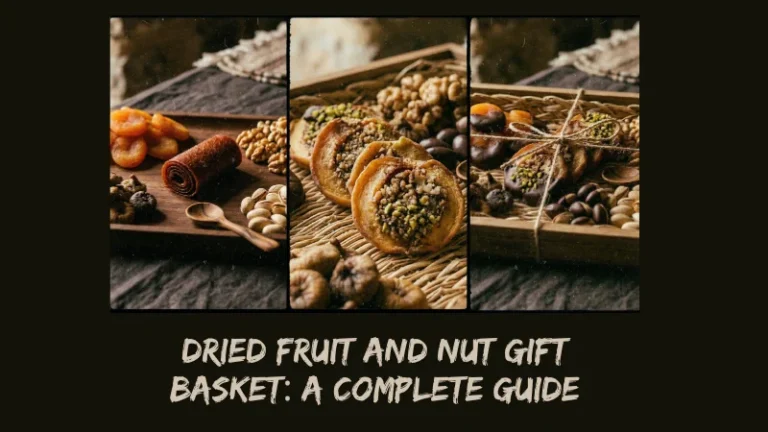
Winter (December – March): Mandarins, oranges, and dried fruit become central. Fresh citrus imported from Georgia and further south anchors winter baskets alongside Armenian dried apricots, figs, walnuts, and mulberry lavash — a fruit leather made from dried mulberry juice that is one of the most distinctly Armenian things you can include in any basket at any time of year.
The Gifting Bridge: From Fruit Basket to Fruit Bouquet
There is a moment where a fruit basket becomes something else entirely.
In Armenian families, fruit has never been a passive gift. It arrives in someone’s hands. It is carried to the door. The person presenting it has thought about what it contains and arranged it with intention — even if that arrangement is simply the careful choice of which apricots to pick from a tree, which ones are full enough, fragrant enough, worthy of bringing to the people they love.
The edible fruit bouquet is the modern form of this ancient impulse. Instead of a basket, a composed arrangement — where strawberries on skewers stand alongside chocolate-dipped apricots, where citrus spheres are carved and placed with the same precision as a florist places flowers — takes the gesture of gifting fruit and makes the care visible. The form says: this was made for you, specifically. It was not taken off a shelf.
This is what Booqart does in Abovyan, delivering to Yerevan and the Kotayk region. The fruit is the same fruit. The intention is the same intention that Armenians have carried for centuries when they arrived at someone’s door with something growing in their hands. Discover the full range of fruit basket gift ideas and edible arrangements at booqart.com, and understand how how Armenians have always used fruit as a language of care in our complete guide to Armenian gifting traditions.
[IMAGE: Hands presenting an edible fruit bouquet wrapped in paper to another person, warm interior light. Alt text: “armenian fruit gift edible bouquet Abovyan Yerevan delivery cultural gifting”. Caption: In Armenian culture, arriving with fruit in your hands has been a complete gesture of care for thousands of years — the edible bouquet is that gesture composed with intention.]
FAQ: What Goes in a Fruit Basket — Everything You Actually Need to Know
What fruits go in a fruit basket for a gift? The most reliable core fruits for any gift basket are apples, pears, grapes, oranges or mandarins, and kiwi. These are all structurally durable enough to survive transport, visually varied enough to compose beautifully, and genuinely enjoyable to eat. Adjust the selection by occasion and season — pomegranate for weddings and celebrations, dried apricots and figs for condolence visits, citrus and apples for everyday or get-well gifting.
What are the best fruit basket ideas for a birthday? Birthday fruit baskets should prioritise visual abundance and seasonal freshness over shelf life. Grapes, strawberries (if same-day delivery), kiwi, and a bold centrepiece fruit like pineapple or a carved melon make for a celebratory arrangement. Pair fresh fruit with chocolate-dipped items or fruit on skewers for added drama. For an Armenian birthday, include pomegranate or dried apricots alongside the fresh selection to add cultural resonance.
What fruits should you NOT put in a fruit basket? Bananas, raspberries, blackberries, and blueberries are the most common mistakes in gift baskets. Bananas brown quickly and emit gas that accelerates ripening in surrounding fruits. Berries deteriorate within 24–48 hours at room temperature. Watermelon is too large and messy for a traditional gift basket format. Any fruit that is at peak ripeness at the time of assembly will be overripe by the time it is received — choose fruit that is 1–2 days before its peak.
What is the national fruit of Armenia and should it go in a fruit basket? The national fruit of Armenia is the apricot — tsiran in Armenian. Its botanical name, Prunus armeniaca, literally translates as “Armenian plum,” reflecting Armenia’s status as the fruit’s original homeland. Dried Armenian apricots are the most culturally meaningful item you can include in a fruit basket intended for an Armenian household, available year-round and far more flavourful than commercial alternatives. Fresh Armenian apricots in season (May–July) are even more extraordinary.
Can you order fruit basket delivery in Yerevan and Abovyan Armenia? Yes. Booqart delivers edible fruit bouquets and arrangements across Abovyan and the Kotayk region, with delivery to Yerevan also available. Orders can be placed via WhatsApp at +374 94 763344. For time-sensitive occasions like birthdays or Women’s Day (March 8), same-day or next-day delivery options are available depending on location.
What fruits do Armenians traditionally include in celebration gifts? Pomegranate is the most symbolically significant celebratory fruit in Armenian culture, associated with fertility, abundance, and new beginnings — it appears at weddings, New Year celebrations, and housewarmings. Grapes reference Armenia’s 6,000-year winemaking heritage and are appropriate at any celebration. Apricots, fresh or dried, are the national fruit and carry deep cultural significance. For winter celebrations, mandarins are ubiquitous on Armenian New Year tables.
How do you keep a fruit basket fresh for longer? Choose fruits that are slightly underripe at the time of assembly so they reach their peak over the 2–3 days following receipt. Keep the basket in a cool, dry place away from direct sunlight — not in the refrigerator, which dries out the fruit. Separate grapes from apples if possible, as apples emit ethylene gas that causes grapes to shrivel faster. Consume the most perishable fruits (grapes, kiwi) first and the most durable (apples, pears, citrus) last.
Conclusion: The Fruit You Choose Tells Them Something
A fruit basket assembled without thought is a gesture. A fruit basket assembled with knowledge of the occasion, the season, the recipient, and the cultural weight each fruit carries — that is a statement.
For an Armenian family, that statement has always been legible. A pomegranate on a wedding table, dried apricots placed before a guest before they are even asked, a basket of tsiran carried to a house where someone is grieving — these are not decorations or dietary choices. They are the language Armenians have been speaking for centuries before they had words for it.
Explore the complete guide to fruit basket gift ideas for every occasion to see how each fruit selection translates into a specific gesture your recipient will understand — and consider our edible fruit arrangements as the version of this tradition made with professional hands, the same care, and all the meaning intact.
Because the best fruit gift is not the most expensive one. It is the one that arrives and makes the person who receives it feel that someone, somewhere, was paying attention.