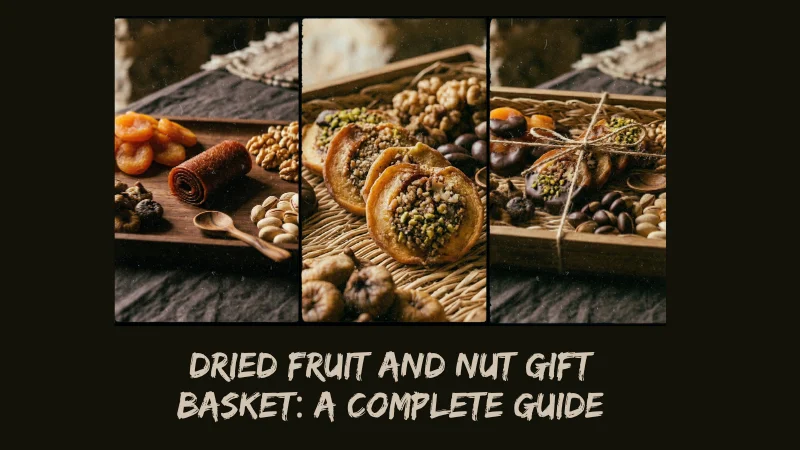
Dried Fruit and Nut Gift Basket: A Complete Guide
Dried Fruit and Nut Gift Basket: What to Include, When to Give, and Why It Matters
A dried fruit and nut gift basket is the most underestimated gift in the Armenian gifting vocabulary. Unlike fresh fruit, which asks to be consumed immediately, dried fruit and nuts say something more patient and more deliberate: I thought about what you would need later. I thought about what would last. As for an Armenian grandmother ,those dried apricots fixed in a fruit basket are the most specific, most irreplaceable thing she could have placed in someone’s hands to take back across a border.
This guide covers what goes into a genuinely exceptional dried fruit basket, organised by occasion and cultural meaning, with specific guidance on the Armenian dried fruits and nuts that transform a generic assortment into something a family will actually remember.
When stacked with scents these gift baskets give the real luxury and aesthetic vibes .
What Makes a Dried Fruit and Nut Gift Basket Actually Good
There is a specific feeling you get when you open a dried fruit gift basket assembled without thought. The apricots are uniformly orange, suspiciously soft, and taste of nothing in particular. The walnuts are pre-shelled and slightly stale. The figs are so dry they snap instead of yield. The whole thing smells faintly of cellophane.
That basket was built for appearance. A genuinely good dried fruit and nut gift basket is built for eating — and for the specific occasion it is entering.
Three criteria separate a memorable dried fruit basket from a forgettable one.
Quality of the dried fruit itself. Commercially dried apricots are treated with sulphur dioxide to preserve their orange colour. Armenian apricots dried in the Ararat valley under direct sun turn tawny and dark — nothing like the fluorescent orange of supermarket varieties — but their flavour concentration is incomparable. The colour is not a defect. It is the proof. Unsulphured, sun-dried fruit from Armenia or from producers using traditional methods tastes chemically different from processed alternatives because it is — the Maillard reaction during natural drying creates depth that industrial processing cannot replicate. When you are building a dried fruit basket that matters, source the apricots correctly or acknowledge that the basket is something different.
The nut selection. Nuts are not filler in a dried fruit basket. They are the counterpoint — the savoury, fatty, textural contrast that makes dried fruit’s sweetness coherent rather than cloying. Walnuts are the most culturally central nut in Armenian food tradition. Pistachios are native to the Caucasus region and carry specific resonance in Armenian cooking. Almonds appear in the most traditional Armenian sweets. Any combination of these three is culturally appropriate; mixing all three makes for the most interesting basket.
The ratio. A well-built dried fruit and nut basket should be roughly 60% fruit to 40% nuts by volume. Any heavier on the nuts and it becomes a nut basket with fruit tokens. Any heavier on the fruit and it becomes a sweet assortment without balance.
An edible gift basket for kids is a healthy alternative to candies and junk food .
The Armenian Dried Fruits That Belong in Every Basket
Armenia is known for its variety of dried fruits, including apricots, figs, and peaches. During summer, Armenians dry fresh fruits, preserving them for use throughout the year. These are often paired with nuts or used in desserts, and they make an excellent souvenir to take home after your trip to Armenia. But this tradition is far older and more deliberate than tourism describes.
Dried Apricot (Tsiran — Tsiran)
The apricot season doesn’t last long — it begins in June and ends at the beginning of August. During the season it is impossible to imagine the Armenian table without apricots. By the end of the season, thrifty housewives select the best ones and dry them. What they produce bears no resemblance to what is sold in most Western supermarkets under the same name.
The apricot tree’s wood is used to make the duduk, a wind instrument that produces a yearning, melancholic sound. The duduk plays at weddings and funerals, in dirges and hymns. The music of the apricot soundtracks the Armenian existence.
This is the dried fruit that carries the most cultural weight in any basket destined for an Armenian home. Place it at the centre — literally and symbolically. Never bury it under packaging. The recipient who opens a dried fruit basket and finds genuinely Armenian-sourced tsiran understands immediately that the person who assembled it knew something.
T’tu Lavash and Bastegh — The Fruit Leather No Other Culture Has Matched
T’tu lavash, also called pastegh or bastegh, isn’t just a tasty treat — it’s an ancient, practical food storage solution for a country blessed with fruit. Made by sun-drying pureed fruit such as plums, grapes, or apricots into thin leather-like sheets, t’tu lavash can be eaten plain or wrapped around nuts for a heartier snack.
If you’re staring at a basket of t’tu lavash and unsure which one to get, ask for the one made with apricots. Locals are especially proud of the Armenian apricot, which is considered a national symbol of Armenia.
Rolling a sheet of bastegh around a walnut and eating them together is one of the oldest snacking traditions in Armenian culture. Including both in a gift basket — the rolled lavash and the walnuts separately, so the recipient can create the combination themselves — is an act of cultural transmission dressed as a gift.
Dried Figs
Fig is one of the sweetest fruits grown in Armenia. They are widely spread in the country and are famous for their unique taste and big sizes. Homemakers make dried fruits from figs which are available throughout the year.
Many types of plump, beefy figs will arrive in August and remain abundant until October, peaking in September. They hardly need sweetening — if you drizzle Armenian gourmet honey over the top of a fig, you will experience something so decadent it borders on indecent.
Dried figs in a gift basket signal abundance and generosity. They are the largest, most visually impressive dried fruit in the Armenian repertoire and they anchor a basket visually the way a pomegranate anchors a fresh fruit arrangement.
Alani — The Gift Within a Gift
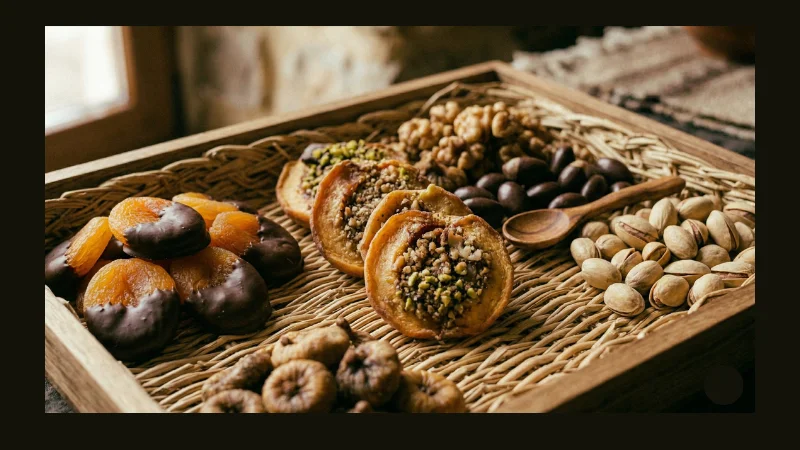
Alani (ալeanի) are pitted dried fruits stuffed with ground walnuts and sugar. Typically made from dried peaches, though apricot versions exist, alani are the most specifically Armenian item you can include in a dried fruit basket. They are not widely known outside Armenian communities. Finding them — at a specialty Armenian market, or ordered through Armenian food importers — signals to the recipient that this basket was assembled by someone who knew exactly what they were doing.
One piece of alani placed on top of an otherwise straightforward basket elevates the entire gesture. It says: I found the thing you thought only your grandmother knew about. It is a humble way to honor Armenian gifting traditions.
Dried Fruit and Nut Gift Basket Ideas by Occasion
Holiday and Christmas Dried Fruit Baskets
The dried fruit basket is at its most culturally natural in winter. In Armenian households, the table from late December through the New Year period is never set without dried fruit — apricots, figs, walnuts, raisins, and candied nuts appear at every gathering, on every surface where people sit together. The Armenian Christmas pudding anoushabour is prepared during Christmas and New Year’s Eve, featuring dried fruits alongside nuts such as almonds and pistachios.
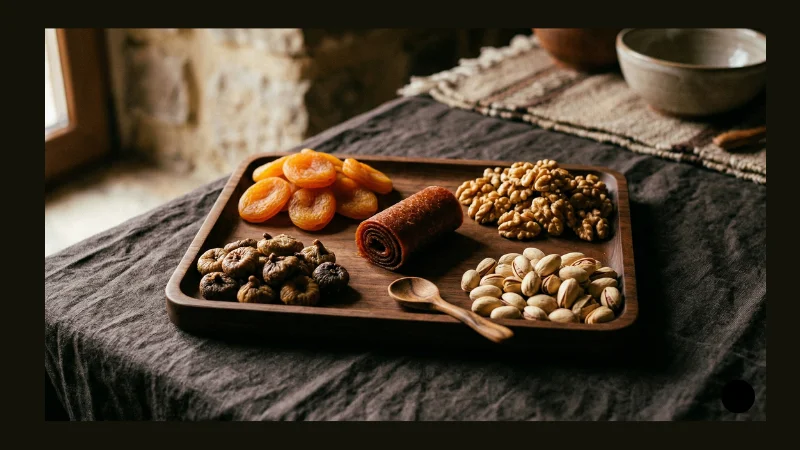
A holiday dried fruit and nut basket built for an Armenian family should include: sulphur-free dried apricots, dried figs, walnuts, pistachios, a roll of bastegh or t’tu lavash if you can source it, and raisins made from Armenian grapes if available. This is the winter table composition given form as a gift.
For Christmas baskets specifically, the addition of dried cranberries provides colour contrast and a festive register that does not exist in purely Armenian produce — this is the one concession to Western gifting aesthetics that actually works without compromising the cultural character of the basket.
Condolence and Sympathy Dried Fruit Baskets
This is the occasion where the dry fruit basket is most specifically Armenian in its logic.
When an Armenian family is in mourning — for the keerk, or in the days of receiving guests that follow — food that lasts matters more than food that dazzles. A dried fruit and nut basket brought to a grieving Armenian household is not a substitute for flowers. It is a parallel gesture, answering a different need. It says: this is for the days ahead, not just today. It can be set on the table and shared across multiple days of visiting guests. It requires no refrigeration, no preparation, no attention the family may not have.
Dried apricots, walnuts, and figs are the appropriate core. Keep the basket restrained in its visual presentation — no ribbon, no cellophane flourishes, nothing festive. Wrap it simply in parchment or place it in a wooden tray. The gesture should feel like provision, not celebration.
Wedding and Engagement Dry Fruit Baskets
Ghapama, a festive dish made from a whole pumpkin stuffed with rice, dried fruits, and nuts, is traditionally prepared during holidays and celebrations, symbolising family unity. The combination of dried fruit and nuts in Armenian celebration food is ancient and deliberate — it represents abundance, sweetness, and the generosity of a household that has enough to share.
For a wedding or engagement dry fruit basket, the register shifts from restrained to opulent. This is the occasion for alani, for premium pistachios, for large figs, for pomegranate-infused dried fruits where available. Adding dried mulberries alongside the standard selections is a gesture that older Armenian guests will recognise immediately — mulberries are among the first sweet delights of the Armenian season, arriving in May, so tender that even the stem is edible. Dried mulberries in a wedding basket carry that same sweetness preserved and offered as a wish for the marriage.
Birthday and Everyday Dry Fruit Gift Baskets
For birthdays and everyday gifting, the dried fruit basket works best when it is paired with something fresh — a basket that combines a seasonal selection of fresh fruit with a curated core of dried fruit and nuts gives the recipient both the immediate pleasure of fresh fruit and the lasting pleasure of dried selections that will still be on the table a week later.
This is also the occasion where chocolate enters the equation. Dried apricots half-dipped in dark chocolate, or walnuts in chocolate coating, bridge the gap between confectionery and traditional food in a way that works for recipients of every age. A dried fruit and chocolate gift basket built around Armenian apricots and dark chocolate is one of the most elegant expressions of the tradition — old in its ingredients, modern in its composition.
What Makes the Best Dried Fruit and Nut Gift Baskets
The difference between a basket that gets eaten in a day and one that gets discussed by the family is almost entirely about sourcing and composition — not price.
Source unsulphured, naturally dried fruit wherever possible. The brown-orange, slightly rough-surfaced apricot is the one with flavour. The bright, uniformly orange apricot is the processed substitute. This single distinction defines whether a dried fruit gift basket is actually Armenian in character or merely Armenian in theme.
Include something unexpected. Alani is the strongest choice. Dried cornelian cherry (kizil) — a small, intensely tart red fruit native to the Caucasus that appears in Armenian cooking as a souring agent and as dried snack — is the second-most surprising and culturally specific addition possible. Dried white mulberries are the third.
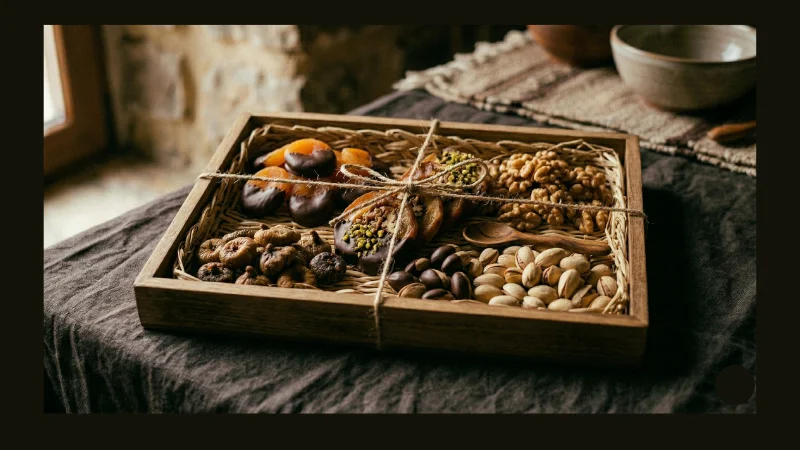
Consider the container. A wooden tray or wooden box communicates longevity and care in a way a cellophane basket does not. The container stays in the household after the contents are consumed. For an Armenian family, a well-made wooden tray with handles becomes a serving piece. Choose the container with the same attention you give the contents.
Layer by texture and colour. Place the largest items (figs, alani) at the back and centre. Fill around them with apricots and dried peaches. Tuck the nuts into the spaces — walnuts in their halves, pistachios in clusters, almonds scattered. Roll the bastegh and place it upright. The finished basket should look like an organised harvest, not a random assortment.
How to Make a Dry Fruit Basket at Home
Making a dry fruit basket at home is entirely achievable and, for an Armenian household, deeply satisfying — because you control the sourcing.
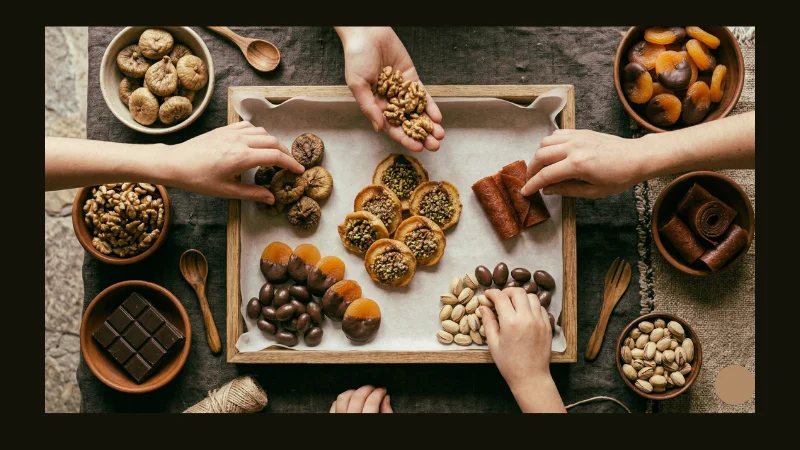
Start with the container: a wooden crate, a shallow wicker basket, or a lined ceramic tray. Cut a sheet of parchment or greaseproof paper to line the base. Begin with your largest items as anchors. Build in layers, filling gaps with smaller items like pistachios and almonds. Roll t’tu lavash sheets into cylinders and stand them at angles for visual height.
For Armenian households sourcing locally in Armenia: the GUM market in Yerevan, located at the intersection of Mashtots and Khorenatsi streets, remains the definitive source for sun-dried Armenian produce — dried apricots, figs, walnuts, alani, and bastegh from producers across the country. For diaspora communities abroad: Armenian specialty grocers in Glendale, Watertown, and Fresno carry authentic Armenian dried fruit. Online, several importers ship directly from Armenia to the US and Europe.
The one thing worth spending more on: the apricots. Everything else in a dried fruit basket can be sourced conveniently. The tsiran is the thing that will be noticed, remembered, and asked about.
The Cultural Context: Dried Fruit Is How Armenians Carried the Homeland
There is a reason dried fruit travels so reliably between generations of Armenians.
Fresh fruit is seasonal, fragile, bound to a place and a moment. Dried fruit survives. It packs into a bag, crosses a border, arrives at a doorway in Glendale or Lyon or Sydney still tasting of the Ararat valley in July. The apricots my grandmother dried were picked from trees my family had cultivated. Wherever they had moved, the apricot trees had travelled with them.
This is the most specific thing about Armenian dried fruit in the diaspora context: it is food that was designed, millennia ago, to survive displacement. The Armenians who invented sun-drying as a preservation method were doing so in a landscape that had always been subject to invasion, to loss, to the need to carry what mattered across distance. They built a food tradition around that reality.
T’tu lavash is an ancient, practical food storage solution for a country blessed with fruit, now found across Armenia’s neighbours under different names — tklapi in Georgia, pestil in Turkey, lavashak in Iran. Its spread is partly the story of Armenian displacement. Every culture that received it received it because an Armenian carried it there.
When you give a dried fruit and nut basket to an Armenian family, you are giving them something that was designed — at a level deeper than any recipe — to be given and to travel. The basket is the tradition made visible.
Gift packaging matters as much as choosing the best gift make sure you know about the best gift wrapping ideas .
The Gifting Bridge: From Dried Fruit to Edible Art
Dried fruit is the preserved version of the Armenian impulse to gift food. Dried fruit is often served as a symbol of hospitality or a gift at various social events in Armenia. Fresh fruit is the immediate version of the same impulse.
The two traditions belong together, which is why the most considered Armenian food gifts have always included both — the fresh fruit of the season and the dried preparations of the season past, set together on the table as evidence that a household has been paying attention to what the land produces and when.
At Booqart, the edible arrangements we build in Abovyan begin from the same logic: fresh fruit, composed with intention, arranged with the same care that an Armenian household once applied to laying out the dried fruits for guests. The form is modern. The impulse is not.
If you are building a dried fruit basket for an occasion and want to pair it with something that carries equal cultural depth in fresh form, explore what fresh fruits belong alongside dried selections in a complete Armenian gift basket — and discover how Armenians have always preserved and gifted the harvest in our complete guide to Armenian gifting traditions.
Because in Armenian food culture, fresh and dried are not two different categories of gift. They are two chapters of the same story about what the land produces and what we choose to carry forward from it.
You may also opt for a chocolate flower gift basket if the ocassion demands .
FAQ: Dried Fruit and Nut Gift Baskets — Everything You Need to Know
What goes in a dried fruit and nut gift basket? The core of a well-built dried fruit and nut basket is: sulphur-free dried apricots, dried figs, walnuts, pistachios, and almonds, in a rough 60:40 fruit-to-nut ratio. For an Armenian household, add t’tu lavash or bastegh (Armenian fruit leather), alani (dried peaches stuffed with walnuts), and dried mulberries if available. These additions convert a generic assortment into a culturally specific gift that will be recognised and appreciated immediately.
What are the best dried fruit and nut gift baskets for the holidays? For Christmas and New Year dried fruit baskets, prioritise warmth and abundance: large dried figs, premium walnuts, Armenian-sourced apricots, pistachios, and dried cranberries for colour. Package them in a wooden box rather than cellophane. For Armenian families specifically, including bastegh or t’tu lavash is the gesture that moves a holiday basket from thoughtful to memorable — it references a preservation tradition the family almost certainly grew up with.
What should go in a dry fruit basket for a wedding? A wedding dry fruit basket should read as opulent and celebratory. Choose alani (stuffed dried fruits), premium pistachios, large figs, dried mulberries, and pomegranate-infused dried fruits where available. Almonds are culturally appropriate for weddings across the Armenian and wider Caucasian tradition — they represent fertility and good fortune. Present the basket in a quality wooden tray or box, arranged by size and colour, without plastic packaging.
What is the difference between organic and regular dried fruit gift baskets? Organic dried fruit baskets use fruit grown without synthetic pesticides and dried without sulphur dioxide or other chemical preservatives. The practical difference is significant: sulphur-free dried apricots are darker, chewier, and more flavourful than their bright-orange treated counterparts. For an Armenian-themed gift basket, sourcing naturally dried, sulphur-free tsiran apricots is more important than the organic certification on the label — the drying method matters more than the farming certification for both flavour and cultural authenticity.
Can you get dried fruit basket delivery in Armenia? Yes. Booqart delivers edible arrangements and gift baskets across Abovyan and the Kotayk region, with delivery to Yerevan available. Orders can be placed via WhatsApp at +374 94 763344. For occasions requiring same-day or next-day delivery — New Year gifts, condolence deliveries, birthday surprises — contact us directly to confirm availability for your specific location.
What dried fruits go well with chocolate in a gift basket for kids? Dried apricots and dark chocolate is the finest pairing in the dried fruit and chocolate gift basket category. The tartness of sun-dried Armenian apricots cuts the bitterness of dark chocolate in a way that creates an entirely new flavour rather than simply two flavours side by side. Dried figs with dark chocolate is the second-strongest pairing. Avoid milk chocolate with intensely flavoured dried fruit — the sweetness compounds rather than contrasts, and the result is cloying.
How long does a dried fruit and nut gift basket last? A properly assembled dried fruit and nut basket kept at room temperature in a dry environment will remain in excellent condition for 2–4 weeks. Individual items vary: sulphur-free dried apricots last 2–3 weeks once opened; walnuts and pistachios remain fresh for 3–4 weeks at room temperature or up to 3 months refrigerated; dried figs last 2–3 weeks. Keep the basket away from direct sunlight and humidity. Do not refrigerate an assembled basket — the temperature differential introduces moisture that accelerates deterioration.
Conclusion: The Basket That Outlasts the Occasion
A fresh fruit basket is a gift for a day. A dried fruit and nut basket is a gift for a fortnight — set on the counter, visited each time someone passes through the kitchen, finished slowly, over the conversations and meals that follow the occasion that prompted it.
In Armenian gculture, that persistence is not incidental. It is the point.
The dried apricot that still tastes of an Armenian summer in the middle of winter is a small act of cultural defiance. Drying fruit was always a way of refusing to let the season end, of keeping what mattered alive through the months when nothing grows. Giving that to someone is not just a food gift. It is a share in something that survived.
Explore what fresh fruits belong alongside dried selections in a complete Armenian gift basket for the other half of this tradition — and when you are ready to give both in one composed, intentional form, find our full range of edible arrangements and gift baskets at Booqart, where everything that grows in this region is arranged with the intention it has always deserved.
Because the best gift is not the most expensive one. It is the one that, when the basket is empty, makes someone reach for the phone to tell someone else where it came from.